Basic HTML Version


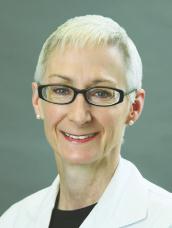
Susan Windham, a nurse practitioner
with West Alabama Urology Associ-
ates, is now a Certified Urology Nurse
Practitioner.
Ms. Windham is one of only 147
nurse practitioners in the nation cur-
rently certified by the Certification
Board for Urologic Nurses and As-
sociates, and she is the only CUNP in
Alabama.
“We’re proud that Susan is part of
an elite group of urologic nurse prac-
titioners,” said Dr. Kenneth Aldridge, a urologist and founding
partner of West Alabama Urology Associates. “Certification
encourages continued education and the learning of new skills,
which means excellence in a clinical setting and better care for
the patient population we serve.”
Certification demonstrates the practitioner is proficient in
assessing health history and physical findings, identifying com-
mon adult and pediatric genitourinary problems, and selecting
appropriate treatment modalities.
To qualify for the exam, the practitioner must have two years
experience as a urology nurse practitioner with a minimum of
800 clinical practice hours of patient care.
Ms. Windham has been with West Alabama Urology Associ-
ates for 13 years. She received a bachelor’s degree in nursing
from the University of South Alabama, a master’s
degree in nursing from Emory University and a nurse
practitioner certificate from the University of Alabama at
Birmingham.
IF YOU HAVE
a condition that requires surgery, you want
every possible advantage, including the most effective, least
invasive surgical treatments available. The da Vinci Surgical
System, which is available at DCH Regional Medical Center, is a
minimally invasive approach that uses the latest in surgical and
robotic techniques.
Minimally invasive surgery allows a physician to perform
an operation through a series of tiny openings instead of one
larger cut. Smaller cuts come with many potential benefits for
the patient, including less discomfort and a quicker recovery.
Dr. M. D. Reed and Dr. Dwight Hooper, Tuscaloosa gyne-
cologists and obstetricians, use the da Vinci surgical system
and think the robotic surgical procedures they can do for their
patients serve them well.
“I want to do the best I can for my patients,” Dr. Reed said.
“I like all of the advantages of robotic surgery—greater preci-
sion and visibility, minimally invasive, less pain and blood loss,
quicker recovery. The quality of robotic surgery is unmatched.”
GYNECOLOGIC CONDITIONS AND ROBOTIC SURGERY
A
wide variety of benign (noncancerous) conditions may affect
a woman’s reproductive system, which consists of the vagina,
uterus, ovaries and fallopian tubes. Most of these conditions
affect the uterus. Common types of gynecologic conditions—
such as fibroids (noncancerous growths in the uterine wall),
endometriosis (noncancerous growths of the uterine lining) or
prolapse (falling or slipping of the uterus)—can cause chronic
pain and heavy bleeding, as well as other disabling symptoms.
When medication and noninvasive procedures are unable to
relieve symptoms, surgery remains the accepted and most effec-
tive treatment for a range of gynecologic conditions.
Gynecologic surgery using a large incision has been the
standard approach for many years. This surgery can include
significant pain, trauma, a long recovery process and a risk to
surrounding organs and nerves.
Dr. Reed said he’s performed robotic surgeries for such
Physicians
credentialed by
MD Anderson
Physicians Network
®
Your physician is your first line of defense
against cancer. That’s why it’s impor-
tant to know that the cancer treatment
specialists at the DCH Cancer Center and
a number of urologists and surgeons are
the only area physicians credentialed by
MD Anderson Physicians Network®.
Through the affiliation with MD An-
derson Physicians Network®, the DCH
Cancer Center works closely with The
University of Texas MD Anderson Cancer
Center to bring a higher level of cancer
care to West Alabama.
To participate in the affiliation with
MD Anderson Physicians Network®, physi-
cians go through a lengthy credentialing
process, including an assessment of the
physician’s office practices and a medical
record review, which allows the physi-
cians to participate in the affiliation with
MD Anderson Physicians Network®.
About MD Anderson Cancer
Center
Located in Houston, The Univer-
sity of Texas MD Anderson Cancer Center
is one of the world’s most respected
centers devoted exclusively to cancer
care, research, education and prevention.
MD Anderson is ranked again this year as
No. 1 in cancer care in the United States
by
U.S.News & World Report’s
America’s
Best Hospitals survey. For 21 years since
the survey’s inception, MD Anderson has
been ranked among the top two cancer
treatment centers in the U.S.
About MD Anderson Physi-
cians Network
®
MD Anderson
Physicians Network®is a quality-
management and best-practices organiza-
tion that delivers cancer-management
services through the MD Anderson Can-
cer Manager program. Its goal is to im-
prove cancer care in a given community
by providing evidenced-based oncology
services to local hospitals in the United
States. The DCH Cancer Center is one of
the few health care facilities to affiliate
with MD Anderson Physicians Network®.
About the DCH Cancer
Center
The original Cancer Center
opened on the campus of DCH Regional
Medical Center in 1986. The new cancer
center began treating patients in May
2009, the same year the Cancer Center
received a three-year approval with com-
mendation from the American College
of Surgeons Commission on Cancer, the
highest level of approval given by the
organization.
For more information about
the DCH Cancer Center, visit
www.dchsystem.com/cancer
.
ROBOTIC SURGERY
A MINIMALIST
APPROACH
To learn more about robotic surgery
at DCH Regional Medical Center, go
to
www.dchsystem.com/surgery
.
Picturing
da Vinci
The da Vinci Si Surgical
System is a computer-
enhanced, robot-assisted
tool that is made up of two
main parts: a cart and a
console.
The cart, which stands
next to the patient, fea-
tures up to four robotic
arms. One of the arms is
equipped with a sophisti-
cated 3-D camera, and the
others can be fitted with
a wide array of surgical
instruments.
A few feet away, the sur-
geon sits at the console.
Using forcepslike controls,
he or she manipulates the
robotic arms with great
precision.
The physician’s every
hand, wrist and finger
movement is translated to
the surgical instruments in-
side the patient. While the
surgeon works, he or she
views the operation on a
magnified, high-resolution
screen. Every action is
directly controlled by the
surgeon—the robotic arms
cannot be programmed to
move on their own.
The da Vinci surgical
system allows surgeons to
perform complex proce-
dures through incisions the
size of a dime.
The smaller open-
ings can lead to several
benefits to the patient,
including:
■
■
Significantly less pain.
■
■
Less blood loss.
■
■
Less scarring.
■
■
Shorter recovery time.
■
■
A faster return to normal
daily activities.
■
■
In many cases, better
clinical outcomes.
things as ovarian cysts and hysterectomies.
“When I started my career, it was around the time of laparo-
scopic surgery, and one of its advantages include smaller inci-
sions,” he said. “Even though smaller incisions are made with
laparoscopic surgery, robotic surgery makes even smaller ones.”
By contrast, robotic-assisted surgery with the da Vinci surgi-
cal system is the least invasive treatment option. Through tiny
incisions, gynecologists can operate with greater precision and
control, minimizing the pain and risk associated with large inci-
sions while increasing the likelihood of a fast recovery and good
clinical outcomes.
UROLOGIC CONDITIONS AND ROBOTIC SURGERY
Physi-
cians routinely use da Vinci to treat several urologic conditions,
including bladder and kidney cancer, but the primary use of the
da Vinci surgical system in urology is for treating prostate cancer.
Dr. Howard Winfield, Urologist, is the Director of Robotic
Surgery at the Regional Medical Center. He is among other urolo-
gists and some gynecologists in Tuscaloosa who perform robotic
surgery at the Regional Medical Center.
Certified Urology Nurse Practitioner Susan Windham, MN, CRNP
Susan Windham,
nurse practitioner
W I N T E R 2 0 1 2
2
H E A L T H Y C O M M U N I T Y
A
d v a n c e d
C
a r e