Basic HTML Version




Women in West Alabama now can have a digital mam-
mogram to help detect breast cancer at any one of the
DCH Health System hospitals. Advanced imaging equip-
ment for digital mammography recently was added at
Fayette Medical Center and Pickens County Medical
Center (PCMC). Digital mammography is also available
in the Breast Care Centers in the Phelps Outpatient Center
at DCH Regional Medical Center and at Northport Medi-
cal Center.
Digital mammography produces clear, highly detailed
images that can detect smaller masses and diagnose
breast cancer earlier.
In addition, physicians use computer-aided technol-
ogy to serve as a second set of eyes as they read mam-
mograms. Digital mammography uses less radiation,
and mammograms can be done in about half the time.
“Fayette Medical Center now has a new and powerful
tool in the detection of and fight against breast cancer,”
said Barry Cochran, Fayette Medical Center Administra-
tor. “This new, all-digital system provides our patients
with state-of-the-art mammograms that are faster, easier
and more accurate, while providing our physicians with
highly detailed images to use in the diagnosis.”
“Pickens County Medical Center is committed to
the fight against breast cancer,” PCMC Administra-
tor Wayne McElroy said. “By offering women digital
mammograms, we hope to increase the number of area
women who follow recommendations for regular screen-
ings, and to remind all women that Pickens County
Medical Center provides the latest in imaging quality
right here at home.”
What is digital mammography?
All mammograms start
the same way—with an X-ray of the breast. Digital mam-
mography is a newer imaging method that processes
images differently. It records and stores images on a
computer rather than on X-ray film. Digital mammo-
grams still require compressing the breasts to get good
images, but there are some advantages over film mam-
mograms, according to the American Cancer Society.
Viewing and sharing
After a woman has had a mam-
mogram, the images are analyzed by a specialist called
a radiologist. With digital mammograms, a radiologist
can adjust the images on the computer screen to get
a better look. The size, brightness or contrast can be
changed to show certain areas more clearly. Some stud-
ies show that this reduces the number of women who
need to return for extra tests
If the radiologist wants to send the images to the pa-
tient’s primary care physician or show them to another
specialist, this can easily be done electronically. Manag-
ing images this way is similar to how digital photos can
be viewed and shared.
Both film and digital mammograms work well to find
breast cancer. However, several studies show that digital
images may be more accurate in women younger than 50
and in women with dense breast tissue, reports the ACS.
FAYET TE MEDICAL CENTER
New outpatient registration area
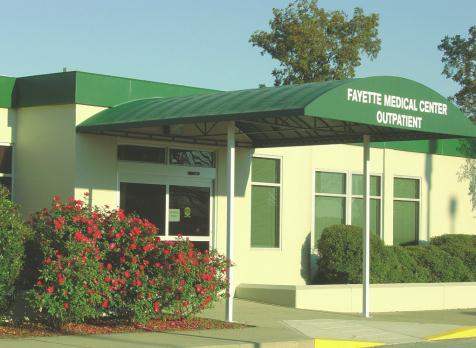
Fayette Medical Center opened a new outpatient registration area in December. It has its own entrance next to the
hospital’s main entrance. The area accommodates patients registering for outpatient lab testing, X-ray, respiratory
therapy and outpatient surgery.
Outpatient registration is open Monday through Friday from 6 a.m. to 5:30 p.m.
“We’ve seen a lot of growth in outpatient services,” said Barry Cochran, Fayette Medical Center Administrator.
“The new registration area meets the growing need and offers our patients additional convenience and privacy.”
Digital mammograms available now at
Fayette and Pickens CountyMedical Center
To read more about
imaging services at
Fayette Medical
Center, go to
www.dchsystem.com
.
Home at last
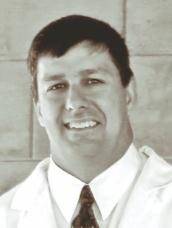
Opening his practice of general
surgery in Fayette in 2011 was
“like coming home,” Dr. Jona-
than K. Smith said.
Dr. Smith is a native of
Haleyville, a little more than
30 miles from Fayette. He is
very familiar with Fayette and
recalls playing against the lo-
cal high school football team
when he was in high school in
Haleyville.
Dr. Smith is in full-time practice in Suites 1 and 2,
Medical Office Building, in Fayette and performs surgi-
cal procedures at Fayette Medical Center, a DCH Health
System hospital.
“I enjoy my practice in Fayette,” Dr. Smith said. “I
feel I, along with patients’ primary care physicians
here, can give them complete care close to home. When
they’re already anxious about their health, not having to
travel greater distances for their care gives them some
peace of mind.”
He added that doing surgeries at Fayette Medical
Center and working with the staff there is rewarding
professionally.
“The size and atmosphere of the community hospi-
tal, I think, provide a special degree of personal care,”
he said.
Fayette Medical Center is a 56-bed rural hospital
that offers the residents of Fayette County inpatient
care, along with sophisticated diagnostic equipment,
surgical techniques and specialty clinics.
“We are very pleased that Dr. Smith returned to Fay-
ette Medical Center and our community for a full-time
practice,” said Barry Cochran, Fayette Medical Center
Administrator. “I think it says a lot for the hospital and
community that Dr. Smith realized from his earlier
work with us that this was the place for him.”
Dr. Smith received his medical degree from The
University of South Alabama College of Medicine in
1. He completed his residency in general surgery
and a transitional internship at the William Beaumont
Army Medical Center in El Paso, Texas, in 2002. He
is board-certified in general surgery by the American
Board of Surgery and has a fellowship in the American
College of Surgeons.
Dr. Smith served in the United States Army, where he
was Chief of General Surgery at the Blanchfield Army
Community Hospital in Fort Campbell, Ky. He was
deployed to Operation Iraqi Freedom with the 2nd
Forward Surgical Team in 2006 and received a Bronze
Star Medal for his service during that time.
Dr. Smith and his wife, Molli, have two sons, Ben
and Nick.
Dr. Jonathan K.
Smith
W I N T E R 2 0 1 2
6
H E A L T H Y C O M M U N I T Y
D C H H E A L T H T A L K
H E A L T H S Y S T E M N E W S